

Selecting the right belt conveyor is a critical decision for any operation. A well-chosen system can boost throughput, reduce manual handling, and lower long-term operating costs. This practical buyer’s guide, written by an experienced expert, outlines how to evaluate options, recognise key features, and work with a reputable belt conveyor supplier to meet specific industry needs.
Define your application and performance requirements
Before comparing models, define the fundamentals of your workflow. Consider:
- Throughput targets: tonnes per hour, items per minute, or total cycle time.
- Product characteristics: bulk solids, loose items, irregular shapes, small parts, or fragile goods.
- Elevation changes: inclined or declined conveyors, vertical lifting, or multiple elevations.
- Duty cycle: continuous, intermittent, or heavy-duty 24/7 operation.
- Environmental conditions: temperature, humidity, dust, chemical exposure, or washdown requirements.
- Space constraints: footprint, headroom, and access for maintenance.
A concise requirements brief helps you avoid over-specification or missing critical features later in the procurement process.
Choose the right belt type and construction
The belt is the heart of any conveyor. Options vary by material, surface, and construction:
- Flat belt conveyor: Versatile for general purpose handling of smooth, stable products; available in PVC, rubber, or specialised synthetics.
- Modular belt vs. traditional belt: Modular belts excel with irregular shapes, accumulation, and lower friction for certain loads, while traditional solid belts are simple and robust.
- Timing belts and matched drives: Used for positive drive applications where slip cannot be tolerated.
- Food-grade belts: Required when handling consumables or in clean environments; look for compliance with relevant regulations (e.g., FSSC 22000, BRC) and easy cleaning.
- Wear-resistant coatings: Consider high-tensile fabric belts or steel-reinforced belts for heavy loads or high wear areas.
The belt material should balance durability, maintenance, cleaning, and product compatibility. A trusted belt conveyor supplier can help specify the optimal belt for your product and conditions.
Evaluate drive systems: powered belt conveyors and motor choices
Power and drive selection influence energy efficiency, control, and reliability:
- Powered belt conveyor: The standard choice for continuous movement, with options for fixed or variable speed.
- Drive arrangement: Central drive, end drive, or return-drive configurations affect tensioning, maintenance, and space.
- Motor type: AC induction motors are common; servo or DC motors may be chosen for precise speed control.
- Variable frequency drive (VFD): Enables smooth acceleration, deceleration, and energy savings; essential for sensitive loads.
- Belt tracking and tensioning: Robust tracking systems and automatic tensioners reduce misalignment and wear.
If your operation requires precise pace or frequent stops, a belt conveyor with a reliable VFD and control system will be beneficial. Your belt conveyor company or conveyor belt supplier can advise on the most suitable drive configuration for your layout.
Consider layout and integration with existing systems
Successful integration depends on planning the end-to-end flow:
- Inbound/outbound handling: Align conveyors with forklift routes, dock doors, and storage destinations.
- Elevation and transfers: Include lifting sections, curved sections, and transfers between conveyors as needed.
- Automation compatibility: Compatibility with sorting, palletising, robotics, and WMS/ERP systems is increasingly important.
- Maintenance access: Adequate space for inspection, belt replacement, and motor service minimises downtime.
- Safety features: Emergency stops, guards, interlocks, belting edge sensors, and clear signage are essential.
A warehouse belt conveyor should be designed with the operators in mind—minimising awkward postures and repetitive motion while ensuring safe, efficient operation.
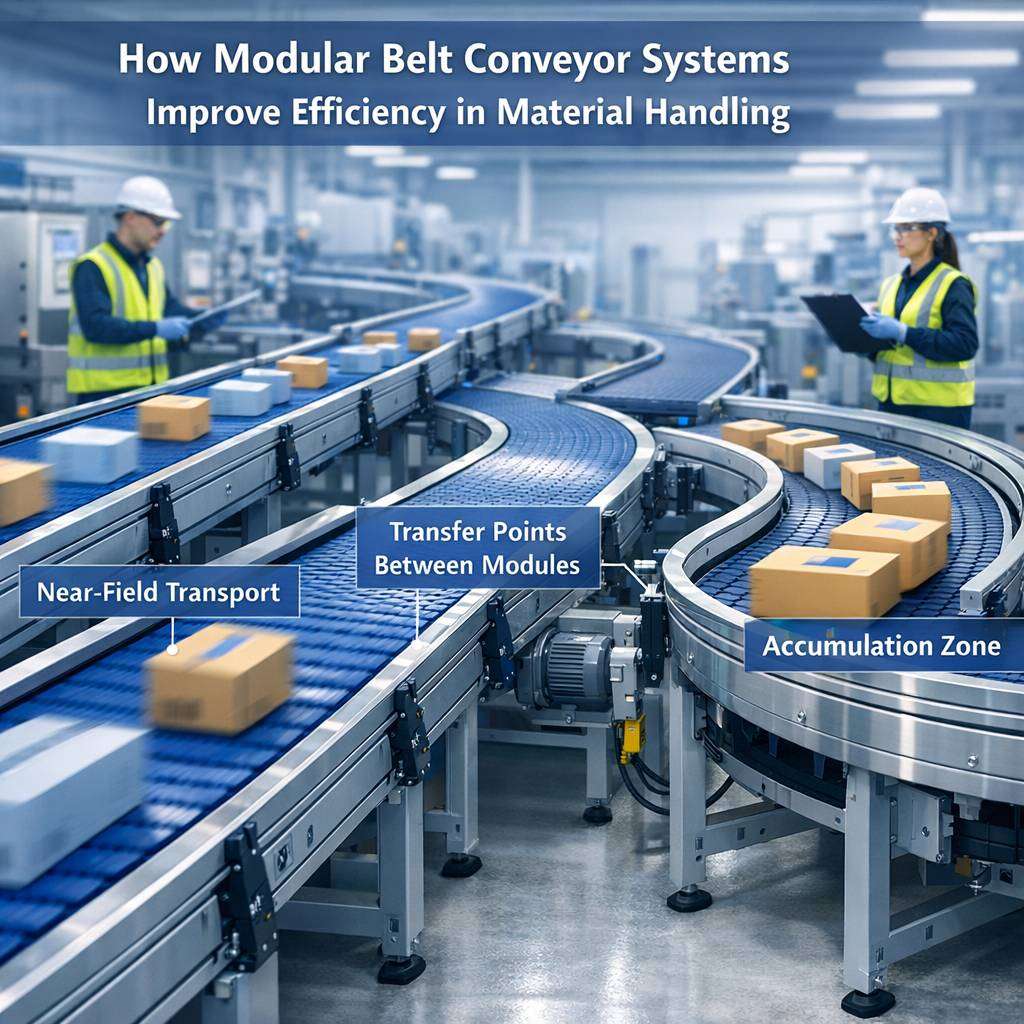
The belt conveyor system transports materials efficiently in modern factories, reducing manual handling and improving safety. A well-designed belt conveyor minimizes downtime while maximizing throughput and product quality. This educational example underscores how engineers optimize flow, tension, and load distribution to sustain continuous operation. See https://oceanservice.noaa.gov/education/tutorial_currents/05conveyor2.html to learn more about conveyor concepts and their real-world applications.
A belt conveyor system streamlines material handling, minimizes manual lifting, and improves throughput in manufacturing and logistics environments. For reliable components and expert guidance, explore practical solutions and high-quality parts at https://conveyorrollers.co.uk. From installation to maintenance, a well-designed belt conveyor boosts efficiency, safety, and productivity across industries, delivering consistent performance and cost-effective operations.
Safety, maintenance, and regulatory considerations
Ongoing reliability is built on thoughtful maintenance planning:
- Belt replacement cycles: Timelines depend on load, speed, and material; ask for a recommended maintenance schedule.
- Lubrication and seals: Indoor environments may require periodic lubrication, while washdown areas demand stainless components and corrosion resistance.
- Dust control: Dust collection or enclosures may be necessary in dusty atmospheres to protect product quality and equipment longevity.
- Safety standards: Ensure compliance with local health and safety regulations, including guarding, safe access, and lockout-tagout procedures.
- Spare parts availability: A reputable belt conveyor supplier should offer readily available spares and service support across the UK.
Belt conveyors for sale come with different warranty terms—assessing coverage and service commitments is part of prudent procurement.
Assess total cost of ownership
Price is important, but total cost of ownership (TCO) provides a clearer picture:
- Capital cost: Purchase price of the conveyor, including any specialised belts or drive systems.
- Installation and commissioning: Site preparation, integration, and testing.
- Operating costs: Energy consumption, belt wear, and maintenance labour.
- Downtime risk: Reliability of the chosen model and the availability of service support.
- End-of-life and recyclability: Consider the environmental impact and potential resale value.
Compare options from belt conveyor suppliers on a TCO basis, not just initial price. A well‑matched system may have higher upfront costs but significantly lower operating expenses.
A belt conveyor system boosts material handling efficiency, reliability, and throughput across industries. When selecting components, focus on durability, tensioning, and supportive maintenance practices for long-term performance. Regular inspections prevent downtime and extend service life. For detailed guidance, see the following resource. https://blog.martin-eng.com/the-9-most-critical-points-of-belt-conveyor-inspection
How to select a belt conveyor supplier or belt conveyors UK partner
- Experience and sector focus: Seek a belt conveyor company with proven experience in your industry, whether manufacturing, logistics, food & beverage, or packaging.
- Technical ability: The supplier should offer design, installation, commissioning, and after-sales support, including spare parts and service.
- References and case studies: Request examples of similar projects and performance outcomes.
- Local presence and service network: A UK-based supplier with a responsive service team can shorten response times for maintenance and repairs.
- Compliance and quality: Ensure adherence to relevant standards, certifications, and quality management processes.
- Flexible options: Look for a supplier offering a range of belt conveyors for sale and adaptable configurations to future needs.
For organisations seeking a reliable partner, it helps to engage early with a recognised belt conveyor supplier who can tailor a solution to your precise operational requirements.
A belt conveyor streamlines material handling in factories, reducing manual labor and boosting throughput. Precision in setup, tension, and alignment ensures smooth operation and minimizes jams. Maintenance routines extend life and safeguard workers. Integrating sensors and automation can optimize speed and monitoring for reliable performance. For deeper insights into conveyor belt guidance, explore expert discussions here: https://discussions.unity.com/t/conveyor-belt-advice/747887. This resource covers practical tips, design considerations, and troubleshooting strategies.
Practical tips for buying
- Start with a precise brief: Product type, throughput, space, and environmental constraints.
- Permit visible testing or trials: If feasible, testing with your products validates belt choice and drive performance.
- Request detailed drawings: Layout, elevations, and integration interfaces prevent costly missteps.
- Negotiate service levels: Ensure spare parts availability, response times, and preventive maintenance plans.
- Plan for scalability: Consider modular or expandable systems to accommodate growth without a full rethink.
By following these guidelines, you can navigate the market confidently, select a belt conveyor system that aligns with your operational goals, and partner with a reputable belt conveyor supplier to deliver reliable, efficient performance.